
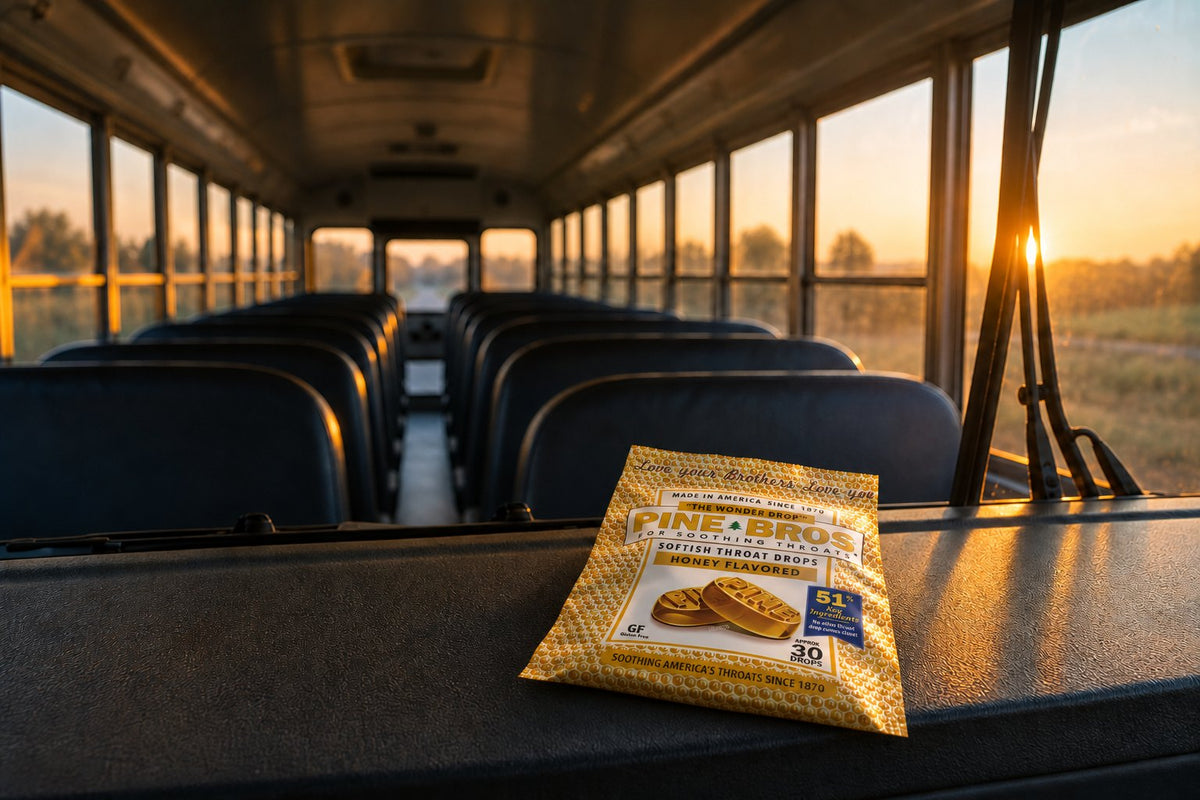
National School Bus Safety Week runs from October 19 through October 23 this year, and every October the campaign says the same things: stop for the flashing lights, watch for kids at the crossing, give the bus room. All of it true, all of it aimed at drivers. But I want to spend this week's column on the person inside the bus, because the bus driver has the hardest driving job in America by a specific measure that has nothing to do with the road: nobody else has to drive with a busload of kids behind them, and that changes everything, including the voice.
I have a soft spot for the bus people. They live on a schedule that would break most adults, they run the same forty-mile loop twice a day in a vehicle that sounds like a waterfall, and they do it while managing, in their mirrors, the most energetic population in the country. The voice is the tool that makes it work. The voice is also the tool they are never given any help protecting.
The First Voice of the Day
The bus driver's day starts with the arrival voice, and the arrival voice is a warm-up act that nobody recognizes as one.
First pickup is early, before the sun clears the trees, and the kids arrive in stages: the ones who run, the ones who drag, the ones who wake up in the seat and need a greeting gentle enough not to startle them. The driver says every name, or tries to, because the name is the whole trick. "Morning, Maya." "You got your lunch, Marcus?" The name-and-greeting pattern sets the tone for the whole ride, and it is the same pattern, twice a day, 180 days a year, on a schedule where being one minute late ripples through every house on the route.
Here is the part worth knowing: the arrival voice is doing the most important vocal work of the day while sounding like the least important. It is low, warm, and constant, and it has to sound like a person who has been awake and cheerful since forever, though the driver has been up since 5. The singers and teachers post makes the case that sustained, repeated, warm speech is a genuine workout, and the front step of a school bus is where that lesson plays out every school-day morning, unrehearsed.
The Noise and the Projection
Then the engine starts, and the real test begins, because the bus is loud.
The road noise, the heater fan, the chatter of thirty kids, the back row, always the back row. The driver has to be heard through all of it, from the front of a bus to the back, without shouting at children in a way that would make the ride feel like a punishment. The bus voice is a projection voice: full breath, steady pitch, and the sentence repeated until it lands. "Backpacks on the floor." "Feet off the seats." "Sit down until we stop, please." The please matters. The projection matters more.
Projection is a technique, not a volume knob. It starts in the breath, it keeps the pitch down, and it ends every call with a beat of silence so the voice can reset. The drivers who master it can be heard over the whole bus without ever walking away hoarse, and the ones who never learned it shout their way through October and pay for it by November. The softish approach to throat comfort on the Pine Brothers blog makes the same argument in product form: the gentle, steady choice is the one that holds up over a long stretch, and it is the long stretch, not the loud moment, that decides how a voice survives a school year.
The Fog Voice
October brings the bus driver's least favorite weather, and it is not the snow. It is the fog.
The autumn fog sits low in the fields by the county roads, and the driver spends October leaning forward, both hands at ten and two, watching the edge of the road appear and disappear. The bus gets quiet in the fog, because the driver gets quiet, and the kids feel it. Nobody talks over a driver who is leaning forward. That quiet is a gift and a risk: the voice rests, and the driver forgets the voice exists, right up until the fog burns off at the second stop and the whole load of announcements comes back at once.
The fog days are the days the driver should be sipping something at every red light, because the bus heater runs dry in October the way it runs hot in January, and the air the driver talks into all day is the driest air in the vehicle. A bottle on the dash and the small comforts within reach are not a treat, they are part of the safety routine. The texture post makes the companion point: the thing you reach for dozens of times a day has to fit the flow of the work, easy to grab mid-route, no ceremony, no second step. That is why the bus veterans keep a Real Honey pack on the dashboard ledge and a Wild Cherry in the door pocket, where the hand lands without the eyes leaving the road.
The Two-Monitor Crew
The bus monitor is the other voice in the bus, and the monitor's voice does the job the driver's cannot.
The monitor sits with the kids, not in front of them. The monitor handles the social layer, the seat assignments, the "who started it" arbitrations, the younger ones who need a hand across the parking lot. The monitor's voice is low and close, a companion register, and it is the voice that absorbs the emotional load of the ride so the driver can hold the road. A good monitor-and-driver pair works like a cockpit: the driver talks to the road and the mirrors, the monitor talks to the bus, and the two voices never compete.
The monitor's vocal hazard is the same as the driver's with the volume reversed: nobody shouts at the monitor's register, but the monitor talks continuously, at close range, into the same dry heater air, all ride long. The monitor's fix is the pocket rule. Whatever helps lives in the vest pocket, because the monitor moves every few minutes. A small pack, water in the seat bag, and the discipline of the quiet interval between stops, letting the low voice sit unused for a real minute.
The Route Voice and Safety Week
Here is what Safety Week should actually train, alongside the crossing signals: the route voice.
The route voice is the driver's rolling safety announcement, the pattern that has saved more kids than the flashing lights, because it happens every single day, not just during the campaign. "We're coming up to the crossing, wait for my signal." "Stay on the sidewalk until I wave you across." The route voice is calm, slow, and absolute, and the kids learn to trust it the way they trust the hand signal at the door. That trust is the safety system. The driver who protects the route voice protects the crossing, because a driver who is hoarse and tired by Thursday is a driver whose route voice has gone flat.
I want to say it plainly, because it is the whole argument of this column: the bus runs on the driver's voice. The engine is maintained, the brakes are checked, the mirrors are adjusted. Nobody checks the voice. And the voice is the only part of the bus that talks to a child.
The Second Ride and the Long Fall
The afternoon route is a different voice from the morning route, and the difference is fatigue on a schedule.
Morning kids are sleepy, so the morning voice is low. Afternoon kids are the opposite, so the afternoon voice has to be brighter and firmer at the exact moment the driver's own voice is running low, after a day that started before the sun. The afternoon ride is where the drivers who protected nothing all day show up hoarse, and it is also where the best drivers run their quietest trick: they hand the talking to the monitor, they let the radio do zero work, and they run the last ten minutes of the route on short, low, essential sentences only. The kids do not need a commentary on the way home. They need to get home.
For the Drivers and the Districts
If you drive a bus and you read this, the setup is short and it fits in a cab.
Water in the cup holder, refilled at the turnaround if there is time. A pack on the dash ledge and one in the door pocket. The projection from the breath, not the throat. The quiet interval at each stop, a real minute of not talking. And the monitor as a partner, not a passenger: hand off the social voice, keep the route voice for the road.
If you run a district, the one-page version of this belongs in the same packet as the pre-trip inspection sheet, because the voice is part of the vehicle. The Pine Brothers blog has been writing voice-care pieces for working crews all season, and the bus garage is the crew that has never had its own entry until now. The company that makes the drops has a century and a half of history behind the idea that steady beats harsh, and there is no steadier room in America than the front seat of a school bus on a foggy October morning. For the record, Pine Brothers has been soothing America's throats for over 150 years, and the brand's quiz takes about a minute if a driver wants a sensible flavor starting point. The product lineup is one scroll away, and the contact page is there for fleet managers who want the routine in a printable form for the garage wall.
This week, when you stop for the flashing lights, wave. The person behind the wheel has been using their voice since before your coffee, and they will use it a hundred more times before lunch.

