
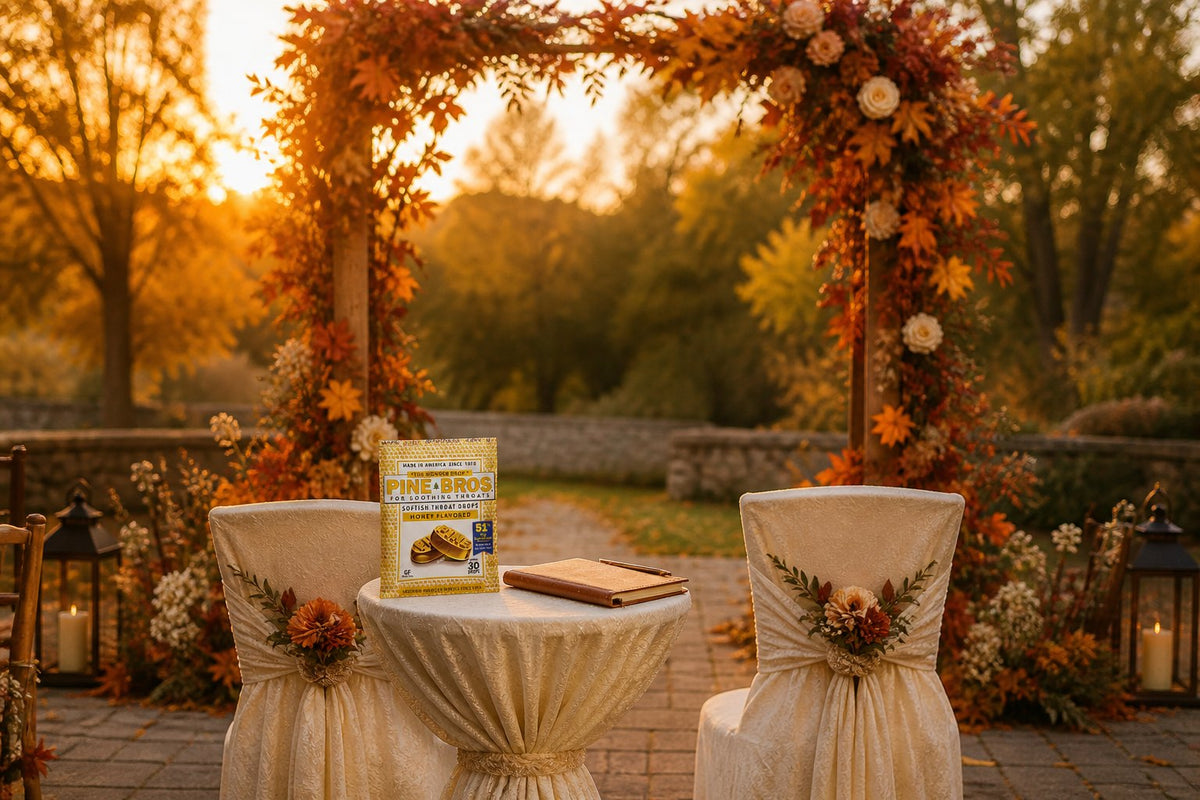
October is the busiest wedding month of the year, and the people who make it work never get a program credit.
The couple gets their name in the save-the-dates. The photographer gets her name on the back of the thank-you cards. But the officiant who holds the ceremony together, the best man whose toast lands just right, the maid of honor who went to three bachelorette weekends and still has to speak at the rehearsal dinner, the soloist who sings through an afternoon of open air and low sun: they are the October wedding voice workers, and their season has a pattern nobody warns them about.
Here is the pattern: the first wedding of the season goes fine, the third one gets harder, and by the fifth one the voice that opened October is not the voice that closes it. This piece is about keeping them the same voice.
The Wedding Voice Is a Weekend Voice
Wedding voice work does not happen on a schedule. It happens on weekends, in bursts, three Saturdays in a row, with five completely different rooms, crowds, sound systems, and ceremonies between the first one and the last one. The voice does not get a weekday to recover, because the weekday is a normal job with its own talking in it.
So the October wedding voice starts every weekend from a baseline that is already carrying the week. That is the thing to plan around: the ceremony is the third voice event of your week, not the first.
The Officiant's Ceremony Voice
The officiant has the most controlled job on the day and the most underestimated one. You speak for ten to fifteen minutes, often outside, often with no microphone, and the entire crowd is quiet, which sounds easy and is actually the hardest condition there is: when a room is silent, the pressure to be heard properly goes up, and the reaching voice comes back.
The officiant also has to hold structure. You are narrating a ceremony, which means you are the one person who cannot improvise too much, cannot drop a line, and cannot let the voice wander. That sustained narrative control, wedding vows included, is a real voice load that stacks across a three-wedding month.
Two habits for officiants specifically:
- Build the "ceremony voice" check into the week before, not the hour before. Do one run-through out loud, at ceremony pace, the evening before. It is the best voice warm-up there is, because it is the exact material, the exact pace, and the exact length.
- Keep water and a pack at the assigned seat or the podium, not in the car. The gap between the rehearsal dinner and the ceremony is the dry stretch, and it is the one nobody plans for because it is full of logistics.
The Toast Problem
The toast is the voice event that scares everyone and ruins the most October voices, because it combines the worst conditions: an evening room, hours of talking before you get up, a drink in one hand, and the pressure of a crowd that wants you to be funny and sincere in the same three minutes.
The three-toast rule is simple: the best man, the maid of honor, the father of the bride, any toast is a performance, even the "off the cuff" ones, and the people who wing it are the ones who later find out what winging it costs. The practical version of this is not about writing. It is about the voice hour: the hour before your toast, you are in a room full of people, talking, laughing, raising your voice over the band. That hour is your voice's pre-toast routine, and it is the wrong one.
If you have a toast in October: take ten minutes before dinner to be quiet. Not five minutes buried in your phone, actual quiet, one walk around the block or one hallway lap. Then drink water, not just the beer, and give the voice one low comfortable sentence before it has to do the big one. The people who do this sound like themselves. That is the whole review.
The Outdoor Ceremony Problem
October ceremonies are garden ceremonies, orchard ceremonies, vineyard ceremonies, and the reason they are beautiful is also the reason they are hard on a voice: they are open air, and open air does not give the sound back.
A room gives you walls. The garden gives you the next county. Anyone who speaks at an outdoor October wedding, officiant, reader, soloist, is doing the reaching voice for the whole ceremony, and the low sun in your eyes adds a squint that tightens the neck, which tightens everything.
The outdoor rule: assume the space is twice as big as it looks and place the chair, podium, or flask accordingly. Also place the comfort kit, water and drops, on the ground beside the spot, not in the getting-ready room that is a ten-minute walk away. You will not leave mid-ceremony to retrieve it, so it has to already be there.

The Wedding Singer's Afternoon
Soloists and ceremony singers have the purest job in the wedding world and the most unforgiving conditions: one song, outdoors, with the crowd noise and the open air and a throat that has done a soundcheck, a rehearsal, and three hours of getting-ready-room conversation before the downbeat.
If that is you, the extra rule is the silent hour: the hour before you sing, you are not available for talking. Not "less talking." The quiet hour, the way a race walker guards the last mile. It sounds rude to be unavailable at a wedding, and it is exactly one hour, and the people who hear the song will never know you were quiet first, which is the point.
Also: the pack goes in the dress or the jacket, not the bag. Not the singer's bag in the corner, the one you are not visiting between the processional and the song. On you, in the pocket, the way every stage performer learns to keep essentials.
The Back-to-Back October Weekend
The real October test is the double wedding weekend: Saturday afternoon garden ceremony, Sunday morning brunch wedding, two different rooms, two different crowds, two different versions of the same need to be heard.
The people who work both days feel it on Monday. The voice that got through Saturday on the novelty of the day is not the voice that Sunday wants, Sunday wants the recovered voice, and recovery does not happen in a single dinner and sleep cycle.
This is where the boring habits earn their keep across the whole month: the pack that lives in the weekend bag full time, not packed fresh each Friday; the water bottle that has a permanent slot; the quiet Sunday morning instead of the loud recovery brunch. The calendar decides when the weddings happen. The routine decides whether the voice keeps up.
The Heritage of It All
It is worth a sentence about the brand here, since the softish idea exists specifically for people with exactly this kind of calendar. Pine Brothers has been making a throat drop that soothes rather than stings since 1870, and the legacy story plus the 150-year retelling are the two best pieces of reading for the long drive home from a wedding weekend. The brand's own softish explanation and texture post make the case that gentle does the real work, which is the argument every wedding voice eventually lands on by November.
The Getting-Ready-Room Trap
One more trap, and it is the biggest one for wedding parties: the getting-ready room. It is a long room, it is full of people, it is exciting, and it is the single loudest extended conversation of the day, hours of hot, dry, champagne-and-hairspray air, everyone talking over everyone.
The getting-ready room is a voice event. It counts. The person who treats the getting-ready hours as part of the voice budget, who takes the one quiet lap, who sips water between the stories, walks into the ceremony with more voice than the person who spent the afternoon winning the room. This is not about being antisocial at a wedding. It is about being the version of yourself who can still do the toast at 7 p.m.
A Weekend-Bag Checklist
For anyone who wants the practical version on one card:
- One pack of drops in the weekend bag, full time, all October.
- A second pack in the car.
- Water in the ceremony kit, at the podium or the seat.
- Ten quiet minutes before any speaking moment.
- One quiet lap outside sometime before dinner, even five minutes.
The Pine Brothers shop has the Real Honey and Wild Cherry packs that tend to fill that weekend bag, because they are the ones people actually keep using. If you want the full family, Honey, Cherry, Elderberry, Licorice, and the sugar-free Cherry are all on the product page, and the quiz on the site (find your flavor here) is a decent ten-second way to pick your ceremonial pack.
The Season Is a Marathon
October weddings are a marathon wearing a sprint's clothes. Every single event is short. The season is long. And the voices that survive it are the ones whose owners treated the month like a load to manage instead of a series of lucky days.
Keep the pack in the bag. Guard the quiet hour. Drink the water. Do the boring thing, every weekend, and by the last wedding of the month, when the room goes quiet and you open your mouth to speak, you will sound like yourself. Which, for anyone whose job is the words, is the entire job.

The Rehearsal Dinner Speech
The rehearsal dinner is the night before the main event, and it has its own voice wrinkle: it is the warm-up act that everyone treats as the off day. The speech is shorter, the room is smaller, the stakes feel lower, and the voice that does both nights back to back learns the hard way that the rehearsal dinner is not free.
So treat the rehearsal dinner speech like a real speech: ten quiet minutes before it, water in hand, the pack in the pocket, the volume set to the room and not to the crowd. The gift is the next day. The voice that did Thursday night at half speed is the voice that has the full tank for Saturday.
The Elopement Officiant's Double Duty
October has a second season hiding inside it, the elopement season. The elopement officiant does everything the wedding officiant does, compressed into three hours: the drive, the setup, the ceremony, the toast, the drive home, sometimes two elopements in a day.
Compressed days forgive nothing. The elopement kit is the wedding kit with no margin: pack in the jacket, water in the car, the whole ceremony said once out loud before you leave the house. The officiants who do October elopements on repeat treat the drive like the warm-up and the ceremony like the race.
What the Officiant Says to the Room
One more thing about the officiant's job, and it is the least technical and most important: the officiant sets the room's voice level. When the officiant speaks with a calm, even, unhurried delivery, the room matches it. When the officiant is rushed, the whole ceremony speeds up, the guests hear less, and the couple's favorite words go by before anyone has time to feel them.
That is a voice-care argument dressed up as a public-speaking argument. The calm delivery is not only better for the room. It is better for the voice, because it keeps the whole ceremony in conversational range instead of climbing. The singers, teachers, and public speakers post on the blog makes the same case in the general case: the people who use their voices for a living keep the delivery calm because the calm is what lasts.
The Last Weekend of the Month
The last wedding weekend of October is the quiet test of the whole season. By then the habits have either formed or they have not. The officiant who kept the pack in the same bag all month finds it without thinking. The toaster who guarded the quiet hour all season sounds like they have not done a single wedding all month. The one who skipped it sounds like a person who has done five.
If you are reading this before your first October wedding, the advice is simple: start the habit at wedding one, not wedding three. The pack in the same pocket, the water in the same slot, the ten quiet minutes before every speaking moment. The season will feel long, and that is exactly why the habits have to be boring and consistent, because the brand's whole softish idea is comfort you can keep, not a rescue you have to remember.
Read more voice-care content on the Pine Brothers blog, and see the brand's own story on Pine Brothers' history. For bulk orders and partner questions, reach out through Pine Brothers contact.