
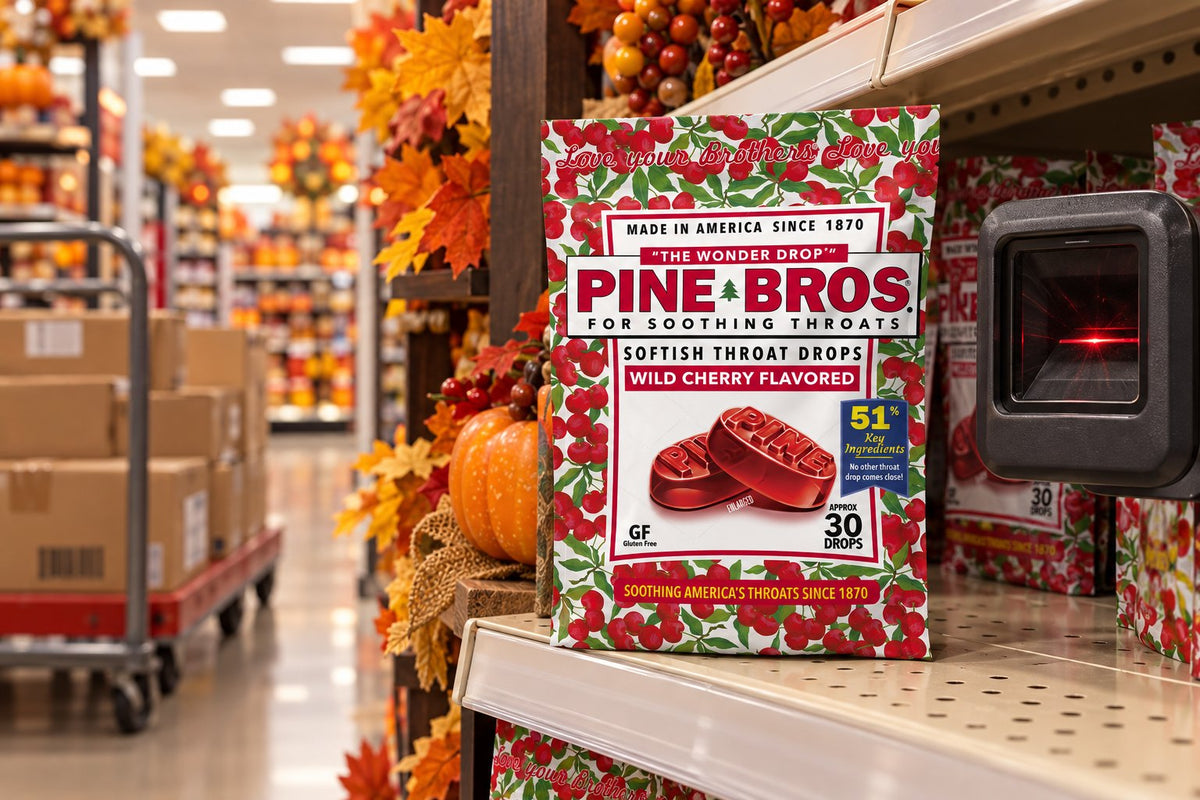
The last week of October is a strange one for anybody who works a store floor. Halloween is Saturday. The month is closing, which means counts and paperwork and the last chance to hit a number. And somewhere in the middle of it, every store in the country is resetting for cold season: out with the seasonal candy, in with the November planograms, and a new display that was built on Tuesday and moved on Thursday.
Through all of it, the store voice is doing what it always does, which is talking. This is the week I want to talk about, because it is the week where the retail voice gets squeezed from three directions at once and nobody plans for it, and it comes right before the clock change turns the whole schedule sideways.
Three Jobs in One Week
A store team in the last week of October is running three shifts at once, and only one of them is on the schedule.
The first job is the sales floor. Halloween week shoppers are a specific crowd: they arrive late, they are looking for one specific thing, and they need a real human to tell them which aisle. "Do you have any more of the light-up ones?" "Where is the face paint?" "Is this the only size?" The questions are fast and repetitive, and every one of them has to be answered as if it is the first time, because it is.
The second job is the reset. The cold-season transition happens in the same week, which means moving product, tearing down seasonal displays, re-merchandising the front end. The reset is loud work in a loud building: box cutters, pallet jacks, people calling to each other across the aisle about where the shelving goes. Reset week is a voice week, and no retailer has ever put it on a calendar as one.
The third job is the count. End-of-month inventory for the departments that do it means a group of people reading numbers out loud for two hours after close, in a dark store, with the music off. Reading numbers in a quiet room sounds like the easiest voice work in the building. It is not, because the voice that comes out after a full day on the floor is not the voice you had at nine in the morning.
The Halloween Shoppers and the Aisle Voice
Halloween week customers are the most direction-dependent shoppers of the year, and that is the whole problem for the floor voice.
In a normal week, a shopper finds their own way around. In Halloween week, they arrive with a costume in mind and no idea where anything is, so the floor associate becomes the navigation system. Ten times an hour, minimum, the same exchange: the specific item, the aisle, the shelf, and the small comment that turns a direction into a helpful interaction. Multiply it by a shift and you have said "aisle fourteen, on the left, past the cards" more times than you would say anything else all month.
Store teams who work this week well do one thing that sounds too simple to matter: they change the answer, not just the volume. Instead of repeating the directions, they walk the shopper to the end of the aisle and point. Sixty seconds of walking replaces two hundred repetitions of the same sentence, and the shopper leaves happier, because a real human walked them there. The voice that is saved by walking is the voice that survives the reset.
The other trick is the map. If your store has a seasonal map at the front, use it. Most Halloween shoppers walk past it because it has been there since September and no one pointed at it. Pointing at the map once per customer costs nothing and removes the sentence from your day entirely.
Reset Week Is a Voice Week
Nobody thinks of setting a planogram as voice work, and that is exactly why reset week wrecks store voices every October.
Reset work is coordination on the move. Two people on a flatbed need to decide, in real time, which shelf comes down and which goes up, usually from opposite ends of an aisle, usually over the noise of a pallet jack. So the voice gets used as a radio: short, loud, constant, across distance. Aisle-to-aisle calling is the single hardest pattern a retail voice does, because it is projection with no audience and no rhythm, over and over, for hours.
The fix is the one the good store managers already know: put the two people on the same end of the aisle for the planning, then split up for the lifting. Ten minutes of close, quiet planning saves an hour of shouting. If your store uses radios for the reset, use them for the reset, and give your voice a break from being the radio.
One more thing about reset week that almost never gets said: the store is dusty when you tear down a display that has been up for six weeks. Dust in the air is not a dramatic problem, it is a background one, and background problems are the ones people blame on the weather. The answer is the same boring answer. Water at the workstation, and a walk to the break room at sensible points in the reset instead of at the end.
If you want a small object that survives a reset shift, the reason so many retail teams keep a Wild Cherry pouch in the apron or on the counter is not complicated. One hand, no wrapper drama, and it does not need a break to use. If you have never chosen a flavor, the brand's quiz takes about a minute, and the full lineup is right there if you would rather just look.
The Count After Close
Then the doors lock, the music goes off, and the count starts.
Counting a department is a very particular voice job. Somebody reads, somebody checks off, and the numbers have to be right, because a miscount in the last week of the month is a problem that shows up on a report somewhere and lands back on the store. So the reading voice goes careful and deliberate, at low volume, in a room that is finally quiet after eight hours of noise.
There is a real trap in the count, and it is not the numbers. It is the sudden switch from loud day to quiet evening. A voice that spent eight hours projecting cannot just drop into a precise counting register, and the first half hour of the count usually sounds awful, which is exactly when the mistakes happen. The teams that count well start the count with a five-minute low-talk period: a steady voice, no counting, just a normal conversation about the aisle order. Then they read. The five minutes is free and it is the difference between a clean count and a recount.
Another thing worth doing: split the reading. Two people alternating the read-out halves the wear and doubles the attention. A count where one person reads for two hours is a count with a croaking reader and a tired checker. The same principle is why the singers, teachers, and public speakers post keeps coming back to rest and rotation: the instrument recovers between efforts, not during them.
The Cold-Season Reset and the Door
There is a physical detail of this week that gets blamed on everything except what it is.
The store's front doors are open all day for Halloween traffic, in the last cold week of October, while the heat is on inside. That means the front-end team is standing in the only part of the building where the temperature is genuinely moving all day: warm by the register, cold every time the doors cycle, dry because the heat is running. The greeter, the cashier, the person doing the returns desk at the front are all working in that current.
That is why so many store voices feel scratchy in the last week of October and not in September. It is not the shoppers. It is the door. The working answer for the front end is the boring one, a bottle at the register rather than in the break room, and it is worth saying plainly to the whole front-end team in the morning, because the person who is driest at 4 p.m. is usually the one who never left the front.
If you are the manager planning the week, there is one change worth making that costs nothing. Rotate the front end on the cold days. Nobody should stand in the door current for a full shift on the coldest week of the month.
The Break Room and the Ten Quiet Minutes
If there is one habit that separates the store teams who come out of the last week of October in good shape from the ones who do not, it is what happens in the break room.
Most retail break rooms are the loudest quiet rooms in America. Eight people on a fifteen-minute break, six of them talking, the television on, somebody's phone playing video. It is social, and it is good for morale, and it is the only recovery window the floor voice gets all day. The teams that use it well do not make anyone sit in silence. They just make the room survivable: television off during the break, one conversation at a time, and the person who needs the quiet end of the table gets it without having to ask.
That is the whole trick, and it costs nothing. A break room where a tired voice can actually rest for ten minutes is worth more to the store than any morale poster ever printed. When the Halloween rush starts again at four, it is the difference between a crew that is merely tired and a crew that has started to croak.
The Deliveries and the Back Door
One more voice station gets left out of every retail piece, and it is the back door.
Deliveries land during business hours in most stores, which means the person receiving them is talking over the loading dock, over a truck engine, over a hand truck on concrete, to a driver who has four more stops and no patience. The back-door voice is short, loud, and transactional, and it is done by whoever happened to be nearest, which is usually already the busiest person in the building.
The fix is the same one that works at the register. Write the exceptions down, because the standard delivery is the same every time. A clipboard by the door with the counts and the signature line removes half the sentences from the exchange, and the half it removes is the half that was being shouted over an idling truck.
The first week of November arrives immediately, with the clock change on Sunday the first, and the holiday ramp already starting to show on the schedule. The end-of-month stretch and the start of the November week are one long pressure curve for the floor voice, and the store teams who plan for it as one stretch instead of two separate weeks are the ones who come out of it sounding fine.
The softish approach to throat comfort is built for exactly this kind of building, something smooth in the background of a dry, loud, door-flapping retail day, easy to reach for without stopping the work. The texture post is worth reading if you want to understand why the feel of the thing is the whole point when you use it a dozen times in a shift.
There is also a version of this that helps the customer, and it is worth putting on the wall: the person at the register has been saying hello and have a good one for eight hours, and Halloween week is the busiest and longest week of their October. The Pine Brothers blog has been writing working-voice pieces all fall, and the store floor is one of the rooms that needed one. A brand that has been soothing America's throats for over 150 years has watched a lot of end-of-Octobers in retail, and the history page reads the way it does for a reason.
If your store would like the end-of-month routine on one page for the break room, the contact page is how to ask for it. Counts will still be counts, and the Halloween crowd will still ask for aisle fourteen. The difference is whether the team behind the counter still has a voice left when the doors lock. If you want the fuller version of the rest-and-water routine, the Pine Brothers blog is where the rest of the fall pieces live.

